





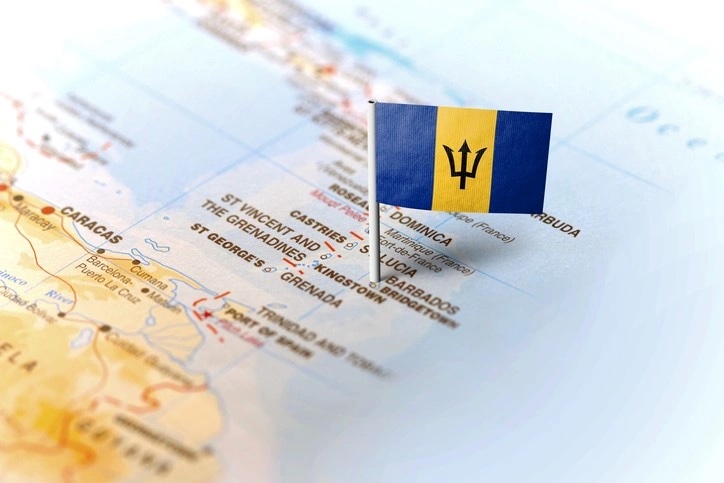






The Executive Board of the International Monetary Fund (IMF) has approved a new 36-month precautionary Stand-By Arrangement (SBA) for Barbados totaling SDR 189 million (approximately US$257 million), equivalent to 200 percent of the country’s IMF quota. The decision provides immediate access to SDR 47 million (around US$64 million), although Barbadian authorities have indicated they intend to treat the arrangement as precautionary.
The new SBA is designed to provide financial insurance against potential external shocks while supporting the implementation of the government’s Barbados Economic Recovery and Transformation Plan 2026 (BERT 2026). The program aims to preserve macroeconomic stability, strengthen resilience, and advance structural reforms in an increasingly uncertain global environment.
Barbados enters the new arrangement from a position of strength following the successful implementation of its previous BERT programs, which were supported by IMF financing. According to the Fund, the country has achieved significant progress in restoring fiscal sustainability, reducing public debt, rebuilding international reserves, and regaining access to capital markets.
Economic activity remained resilient throughout 2025, with GDP growth estimated at 2.7 percent. The labor market continued to perform strongly, while inflation moderated to an average of 0.9 percent. Foreign direct investment increased substantially, helping finance a current account deficit of 5.7 percent of GDP. Meanwhile, gross international reserves stood at approximately US$1.5 billion at the end of 2025, covering around six months of imports and providing solid support for the country’s exchange rate peg.
Fiscal performance also remained robust. Barbados recorded a primary surplus of 4.2 percent of GDP in fiscal year 2025/26, supported by strong corporate income tax revenues. These revenues enabled the government to expand public investment in infrastructure and climate resilience projects while maintaining a commitment to debt reduction.
The IMF noted that growth is expected to remain stable in 2026, although downside risks persist. Global geopolitical tensions, policy uncertainty, elevated commodity prices, and Barbados’ exposure to natural disasters continue to pose challenges to the economic outlook.
Supporting Stability and Reform
The new SBA focuses on four key priorities: maintaining strong fiscal accounts and debt sustainability, preserving adequate international reserves to support the exchange rate regime, advancing structural reforms to strengthen institutions and financial stability, and promoting productivity, competitiveness, and climate resilience.
Nigel Clarke, IMF Deputy Managing Director and Acting Chair, highlighted the country’s achievements under previous reform programs.
“The authorities’ strong implementation of the homegrown Barbados Economic Recovery and Transformation Plan has reinforced macroeconomic stability and facilitated structural reforms,” Clarke said. “Public debt is on a firm downward path, international reserves have been rebuilt, access to capital markets has been restored, and important structural reforms have been completed to help boost growth and strengthen resilience.”
He added that the precautionary arrangement would help Barbados navigate an increasingly uncertain global environment while supporting the next phase of economic transformation under BERT 2026.
Debt Reduction and Resilience Remain Central
IMF Executive Directors welcomed the government’s commitment to maintaining high primary fiscal surpluses with the objective of reducing public debt to 60 percent of GDP by fiscal year 2035/36. Directors also emphasized the importance of channeling any additional revenue windfalls toward resilience-building investments and strengthening fiscal buffers.
The Board further encouraged continued reforms aimed at enhancing revenue administration, improving public financial management, strengthening oversight of state-owned enterprises, and implementing the country’s new Public-Private Partnership framework.
On the monetary and financial front, Directors agreed that international reserves remain adequate to support the exchange rate peg, which continues to serve as a key anchor of macroeconomic stability. They also welcomed ongoing efforts to strengthen banking supervision, operationalize the new deposit insurance scheme, and further enhance the anti-money laundering and counter-terrorism financing framework.
Long-Term Growth Priorities
Looking ahead, the IMF stressed that structural reforms will be critical to raising Barbados’ growth potential over the medium term. Key priorities include addressing infrastructure bottlenecks, improving the business environment, reducing skills gaps, and accelerating the transition toward renewable energy.
The Fund also commended the government’s commitment to strengthening resilience against external shocks and natural disasters, a particularly important objective for small island economies facing increasing climate-related risks.
With the approval of the new precautionary arrangement, Barbados gains an additional layer of financial protection while continuing its efforts to consolidate economic gains, enhance resilience, and pursue sustainable and inclusive long-term growth.