







Statement from the Ministry of Environment and National Beautification, Blue and Green Economy, the Environmental Protection Department and the Ministry of Energy and Business on Battery and Waste Disposal
The Ministry of Environment and National Beautification (MENB), Blue and Green Economy, through the Environmental Protection Department (EPD) and the Ministry of Energy and Business (MEB), acknowledge the article published in Barbados Today on July 12, 2025, highlighting the concerns with respect to the disposal of batteries and waste from electrical and electronic equipment (WEEE).
We welcome this national conversation and would like to enhance the dialogue by providing information on the existing legislative framework, institutional responsibilities and ongoing work regarding battery disposal and WEEE, particularly from the renewable energy sector. We also wish to reaffirm our commitment to ensuring the safe and sustainable management of hazardous waste in Barbados, that has been generated as a result of our energy transition.
Contrary to the assertion that there is no formal governmental position on the matter, Barbados has in place several legislative instruments and policies that target the safe management of hazardous materials over their life cycle. The specific instruments include the Planning and Development Act 2019, Planning and Development (Amendment) Act, 2020, the Planning and Development (Environmental Impact Assessment) Regulations, 2021, Electricity Supply Act, 2024-26, and the Policy for the Management of Hazardous Chemicals and Toxic Wastes, 2006.
The Planning and Development Act 2019, Planning and Development (Amendment) Act, 2020 and the Planning and Development (Environmental Impact Assessment) Regulations, 2021 are the primary laws that address the development and use of land resources for development activity.
Contrary to the assertion that there is no formal governmental position on the matter, Barbados has in place several legislative instruments and policies that target the safe management of hazardous materials over their life cycle. The specific instruments include the Planning and Development Act 2019, Planning and Development (Amendment) Act, 2020, the Planning and Development (Environmental Impact Assessment) Regulations, 2021, Electricity Supply Act, 2024-26, and the Policy for the Management of Hazardous Chemicals and Toxic Wastes, 2006.
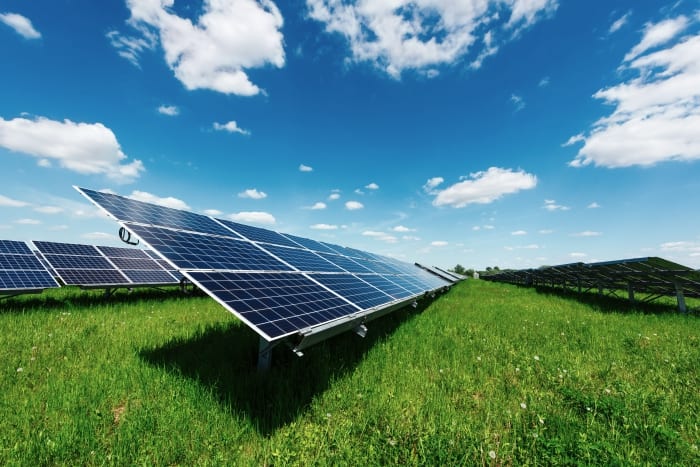
Utility level renewable energy systems require planning permission for systems greater than 1 MW. These systems require an environmental impact assessment, which would generally attach conditions to address decommissioning of the system including the management of WEEE and the decommissioned battery system.
The Electricity Supply Act, 2024-26 aims to “regulate the generation, storage, transmission, distribution, dispatch, supply and sale of electricity and promote local participation, competition and the adoption of energy practices and technologies in the electricity sector that are sustainable to enhance energy security, climate resiliency and ensure the reliability and affordability of services in the sector”.
More specifically, under this Act, Sections 54 and 55 speak to the decommissioning of renewable energy systems and the establishment of a Decommissioning Fund to cover the cost associated with decommissioning. These provisions state that systems exceeding 500kW cannot be decommissioned without making a reasonable effort to mitigate the impact of the decommissioning on the environment and that licensee must contribute to a fund to cover decommissioning costs.
The decommissioning plan must be approved by the Minister and is to be updated every three (3) years, to take into account any changes in good industry practice. These decommissioning plans are expected to provide clear information on the management of potential WEEE in accordance with the waste management hierarchy to prevent, reuse, recycle, recover, and dispose waste materials.
The current Policy for the Management of Hazardous Chemicals and Toxic Wastes speaks to establishing systems for the management of hazardous materials and wastes across the life cycle of the materials and would include import and export controls, handling and transport, business operations and final disposal. It is noted that this policy is not support as yet by comprehensive chemicals management legislation but Government is working to address this recognised gap.
More broadly, within the governance framework of Barbados, the EPD is the lead agency responsible for regulating hazardous materials and waste in Barbados. Its responsibilities include:
- Regulating and facilitating the disposal of hazardous waste;
- Advising on best practices for hazardous waste management;
- Developing relevant policies and standards; and
- Monitoring disposal sites and regulating commercial and industrial waste.
The EPD is also responsible for implementing multilateral environmental agreements such as the Basel Convention on the Control of Transboundary Movements of Hazardous Wastes and their Disposal, which is relevant for the management of hazardous materials in Barbados.
Certain WEEE, including batteries, may be classified as hazardous materials under the provisions of this international instrument. Hazardous materials that fall under the necessary annex identified in the Basel Convention are recommended by the EPD for export and environmentally sound disposal through the prior informed consent procedure described in the Convention.
Recognising the legislative and technical constraints within the governance system and the potential threat from the growing volume of electrical and electronic systems that would eventually be discarded as wastes, the Government of Barbados, through the Environmental Protection Department requested assistance from the Basel Convention Regional Centre for Training and Technology Transfer for the Caribbean (BCRC).
As a result, the EPD is working in partnership with the BCRC and the InterAmerican Development Bank, to identify appropriate policy, laws and strategies to manage these wastes through a consultancy. The objective of this consultancy is to develop a policy framework for the environmentally sound management of WEEE associated with renewable energy, including Lithium-ion (Li-ion) batteries and solar panels, in Barbados.
In addition, the Blue Tech for Waste Challenge, which is being managed by the Inter-American Development Bank, aims to identify and support innovative companies tackling hazardous waste management in the Caribbean. The focus for this initiative includes nine priority waste streams:
- Used Lubricating Oils
- Used and End-of-life Tires
- Used and End-of-life Vehicles
- Used and End-of-life Electronic and Electrical Equipment (E-waste)
- Plastics
- Manufacturing/Industrial Waste
- Organic and Municipal Solid Waste
- Medical Waste
- Hazardous Pesticides
Companies with existing initiatives that fall within the identified focal areas identified are invited to contact the Environmental Protection Department to explore this potential opportunity for affordable financing.
The public should also note that the EPD provides guidance to individuals and businesses on the safe disposal of hazardous materials. Members of the public can email written requests to epd.secretary@epd.gov.bb for advice on disposing of specific chemicals or waste types. Additionally, the EPD recognises that more still needs to be done.
It is our hope that this information has been useful and we look forward to continued robust discussions on this topic. Effective waste management is a critical component of environmental management and our energy transition. The MENB, through the EPD, and the MEB commit to work with all stakeholders to ensure that our policies, infrastructure, and legal framework evolve to meet the challenges of modern waste streams.